
Portable clip-on light for multiple scenarios: designed for portable lighting and hands-free operation
The core value of portable clip-on lights for multi-scenario carrying is that they fix the light in the location you need, instead of constantly occupying your hand to hold the light. For hiking, camping, night patrols, temporary repairs, or emergency operations, these clip-on lights solve a very direct problem: keeping your hands free while you're moving. Attaching the light to a backpack shoulder strap, vest, or webbing provides more stable lighting and allows for more natural movement, making it especially suitable for scenarios where you need to see, operate, and illuminate simultaneously.
Product Overview
Judging from its visible structure, this product is a small, external, portable lighting device. It has a compact, black rectangular body with a circular lens/reflector at the front and red buttons or indicators on the side. It's mounted on a backpack shoulder strap or similar webbing, indicating that its design focus is not on desktop lighting, but rather on wearable, portable, and fixed use. This structure is very user-friendly for outdoor enthusiasts: it eliminates the need for handheld use, doesn't occupy the hands, and reduces the problem of the light shifting frequently while walking.
These products typically cater to users who require short-term, immediate, and portable lighting. Compared to traditional flashlights, they are better suited for continuous operation when strapped to equipment; compared to headlamps, their mounting positions are more flexible and suitable for different wearing styles. For those who need to maintain visibility at night while minimizing head strain, portable clip-on lights offer a practical supplementary lighting solution for various scenarios.
Key features and usage capabilities
Compact design, suitable for carrying around
As you can see, the product is small in size and has a simple outline, making it suitable for mounting on backpack shoulder straps, vest webbing, or other narrow mounting surfaces. The benefits of the compact design are straightforward: it is less likely to become a burden and less likely to cause noticeable swaying during movement.
Forward-facing light emission, satisfying both near-field and path lighting needs.
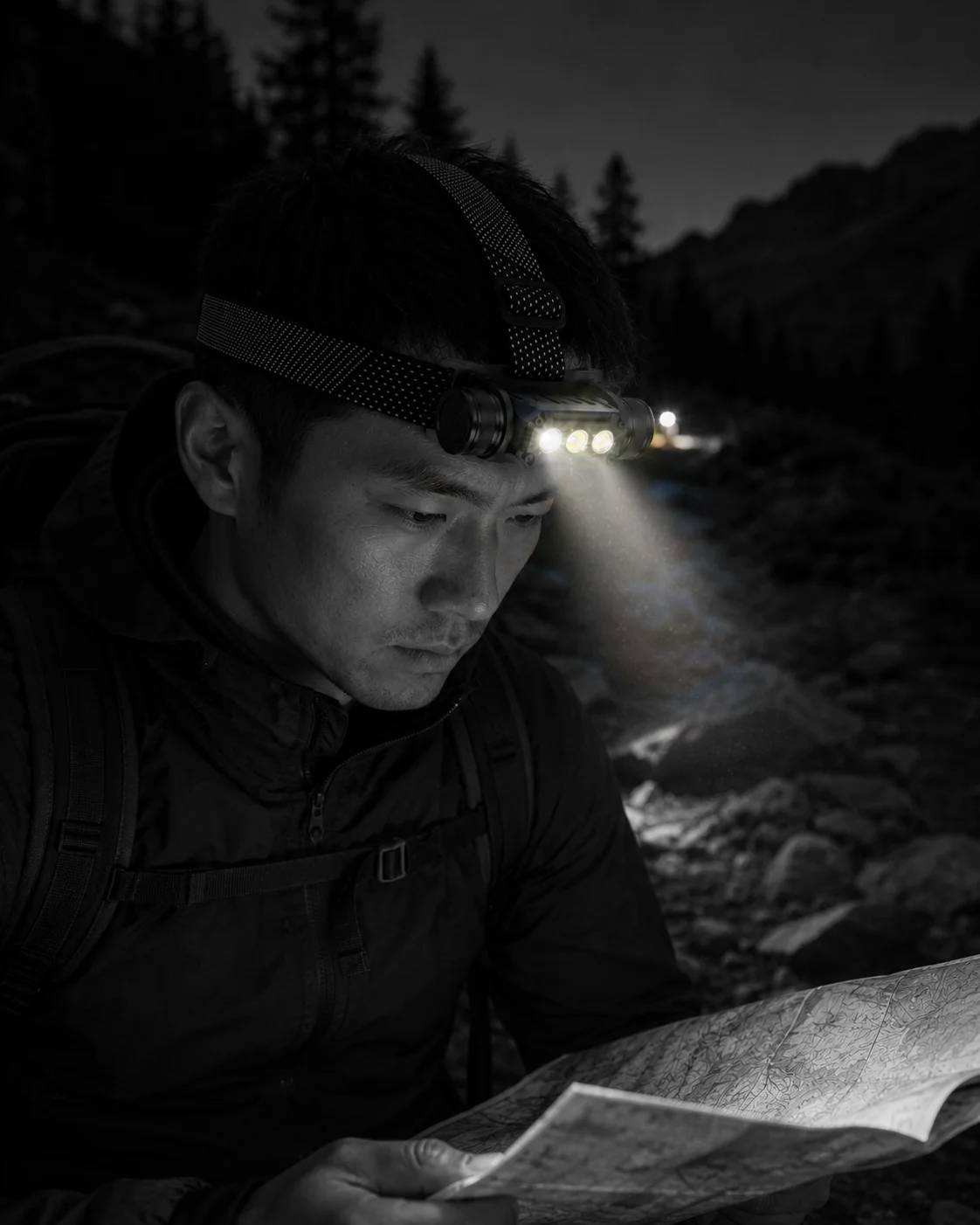
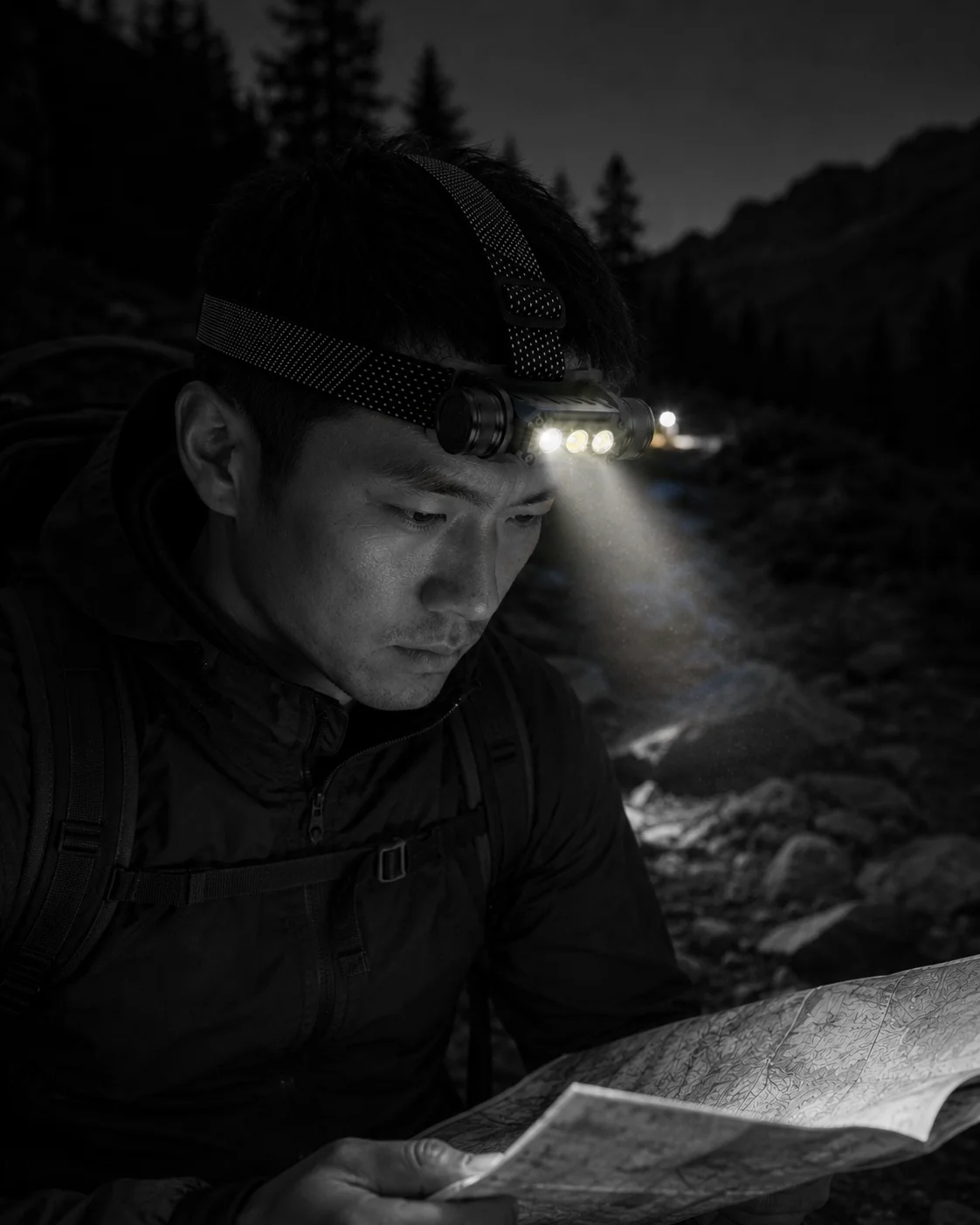
The front lens/reflector cup indicates its directional light output capability, making it more suitable for illuminating roads, work surfaces, or temporary target areas. For nighttime walking, searching for equipment, reading maps, handling wiring, or inspecting components, this forward-facing lighting method is more practical than diffused ambient light.
Visual control elements for easy operation
Red buttons or indicators on the side of the device are easier to identify in low-light conditions and also help to quickly locate the control area. Actual functions may vary depending on the specific model, but from an aesthetic perspective, the operating logic should be simple, making it easy to turn on/off, switch modes, or confirm status while wearing gloves or in low-light conditions.
Materials and Surface Treatment
As seen in the images, the casing has a matte or semi-matte black finish, which generally helps reduce glare and fingerprints. Since the specific material cannot be confirmed from the images, it cannot be definitively identified as either plastic or metal. However, given the common manufacturing methods for such products, the casing often uses injection-molded parts combined with electronic modules to balance lightweight design, structural stability, and mass production efficiency.
If material options need to be evaluated during procurement, it is recommended to focus on the following aspects: the impact resistance of the casing, the wear resistance of the buttons, the rebound performance of the clamping components, and whether the surface is prone to aging under long-term outdoor use. If the application scenario involves low temperature, humidity, or frequent friction, the surface treatment and casing strength will directly affect the service life.
Typical manufacturing process
These clip-on lighting products typically involve multiple standard manufacturing stages. The housing may be injection molded, followed by surface finishing and assembly; the interior integrates the light source, control circuitry, power supply unit, and light guide/lens components. The clamping structure generally needs to consider assembly tolerances, elastic holding force, or fixation reliability to ensure it does not easily detach when mounted on webbing.
If the product design includes a sealed structure, it may also involve dustproof, splashproof, or structural protection measures, but the specific level cannot be inferred from images. During procurement or development, suppliers should be required to clearly define the structural design, material sources, assembly process, and factory inspection items to avoid focusing solely on appearance while ignoring key performance aspects.
Applicable Scenarios
Portable clip-on lights are versatile and suitable for a wide range of applications, especially the following types of needs:
First, it's useful for outdoor hiking and camping. It provides directional lighting, reducing the burden on your hands, when searching for campsite items at night, checking your route, or organizing your backpack.
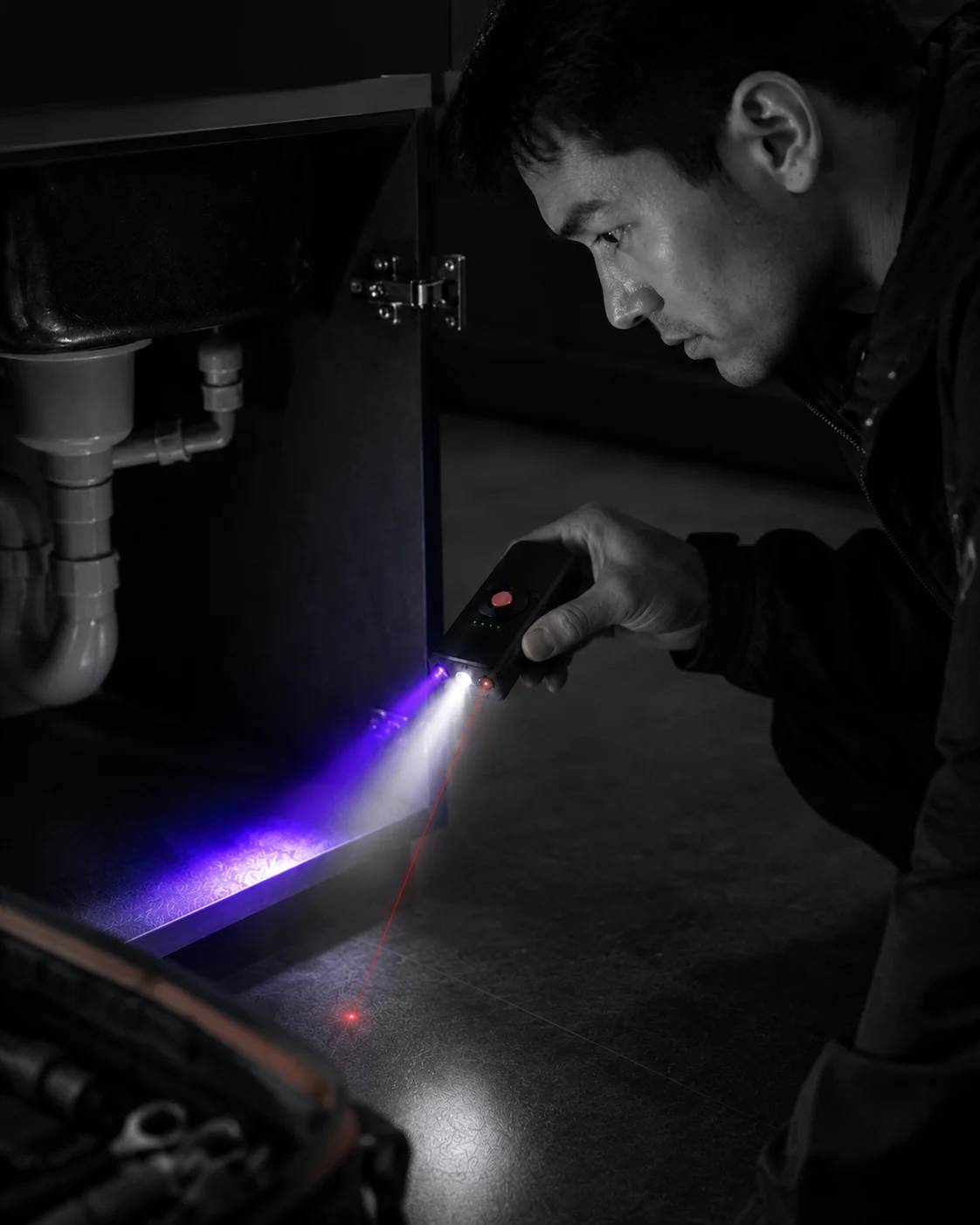
Second, low-light working environments. For example, in scenarios such as temporary maintenance, line inspection, equipment inspection, and warehouse handling, lights clipped to shoulder straps or workwear webbing can allow the light source to follow the movement of personnel.
Third, emergency backup lighting. In situations such as power outages, road malfunctions, vehicle trunk organization, and temporary evacuation, fixed small lights can become operational faster than temporarily using a flashlight.
Fourth, improved nighttime visibility. In addition to the lighting itself, the design with red elements can also visually help identify the location of the equipment, making it easier to quickly find the switch or determine its working status.
Quality control focus
When selecting or customizing such products, one should not only consider the appearance. What truly affects the user experience are a set of basic but crucial quality control points.
First, there's assembly consistency. Whether the lamp head is centered, whether the buttons operate smoothly, and whether the clamping structure is secure all affect the wearing experience. Second, there's electrical stability. Whether the switch contact is reliable, whether mode switching is clear, and whether there's any noticeable looseness when the lamp body is working all need to be confirmed before mass production. Third, there's the durability of the shell and mounting structure, especially for products that are frequently clipped to the shoulder strap; whether they loosen after repeated disassembly and reassembly is a very practical inspection item.
If the product will be used in outdoor or industrial auxiliary scenarios, attention should also be paid to basic protection, temperature rise control, and shock resistance during transportation. Specific testing standards need to be confirmed based on the actual specifications and supplier documents, and cannot be judged solely based on images.
Customizable direction
For B2B procurement, the common customization directions for such products mainly focus on three aspects: appearance, structure, and function.
In terms of appearance, considerations could include shell color, button identification color, surface texture, or brand logo placement. Structurally, the clamping method could be adjusted to suit backpack shoulder straps, webbing, or workwear requirements. Functionally, this might involve lighting modes, operating logic, power supply methods, or indicator methods. Since specific parameters are not provided, it should not be assumed that it necessarily supports charging, magnetic attachment, or a detachable structure; the actual design should be confirmed based on the prototype.
If you are developing your own brand or providing supporting solutions for specific scenarios, it is recommended to clarify the following questions first: Where will the installation location be? What is the required duration of each use? Is it necessary to wear gloves during operation? Does it need to be compatible with different widths of webbing? Does it need to maintain a consistent style with existing equipment systems? Addressing these questions upfront can significantly reduce repeated modifications later.
What should be the focus of comparison when making procurement decisions?
When choosing this type of product, it's recommended to focus on actual usage conditions rather than just whether it's "bright." First, consider wearing stability: does it shift, wobble, or fall off after being clipped to the shoulder strap? Second, consider ease of operation: can you quickly find the buttons in the dark or while wearing gloves? Third, consider size and weight: the more you need to carry it around, the less it should add significant burden. Fourth, consider power supply and maintenance: how easy is it to replace batteries, charge, or perform routine maintenance? This directly impacts repeat purchases and customer satisfaction.
In addition, channel procurement should also focus on assembly consistency, appearance consistency, and batch delivery stability. For customers who need to sell backpacks, workwear, or emergency kits, a consistent size logic and a stable installation method are often more important than simple parameters.
Why is it suitable for carrying in multiple scenarios?
"Multi-scenario portability" is not just an empty description, but rather the most practical selling point of this type of product. It's not confined to a single mode of use, but can be carried with different equipment systems: clipped to a backpack strap during hiking, attached to work gear webbing during work, and fixed in an easily accessible location during emergencies. For users, a lamp that can switch between different roles is more likely to be included in their daily gear list, rather than being taken out only in rare situations.
From a product design perspective, this also means that it needs to balance lightweight, compactness, ease of clamping, and basic durability. As long as these underlying capabilities are solid, a portable clip-on light that can be carried in multiple scenarios will not just be a name, but a tool that can truly reduce the burden of operation.
For more product information or customized solutions
If you're looking for portable lighting solutions suitable for backpacks, workwear, emergency kits, or outdoor gear, you can further confirm the installation method, light source specifications, and structural requirements based on your usage scenario. We welcome your target application, mounting location, and appearance preferences, so we can compile configuration suggestions that better align with your procurement and development needs, helping you quickly determine if this type of clip-on lighting product is suitable for your project.