Portable multi-functional inspection light, suitable for workplaces and daily operations.
illumination
This handheld light, combining UV, white light, and red laser, meets diverse lighting needs and solves a common problem for buyers who require a compact tool for multiple tasks: close-up inspection, general illumination, and simple pointing or marking. Instead of carrying separate bulbs for task lighting and calibration, this multi-functional device integrates different light source outputs into a single portable unit. This is useful for maintenance teams, field technicians, warehouse workers, campers, and anyone who needs a practical light source and the ability to quickly switch between work modes.
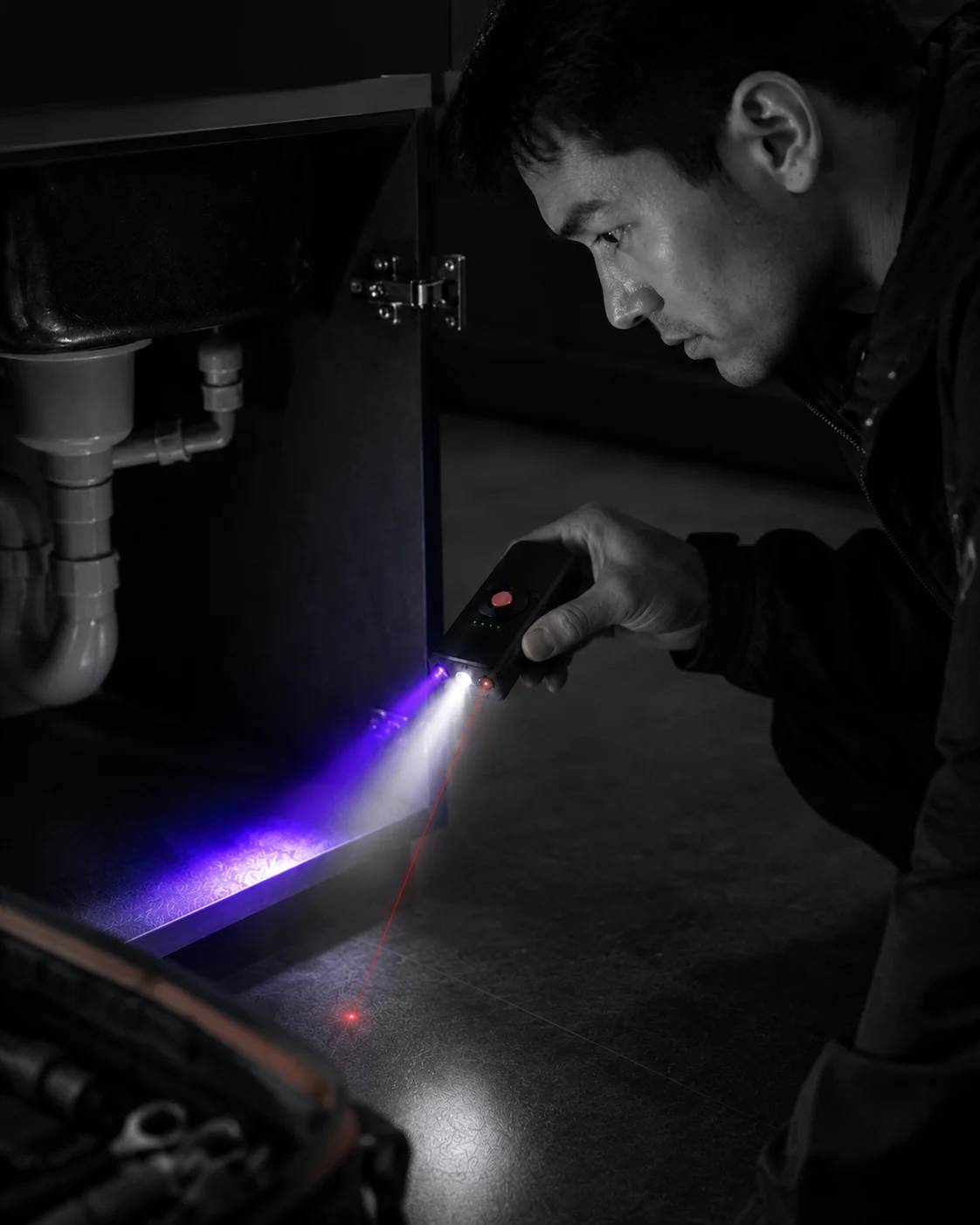
Based on a visible light product structure, this is a compact inspection flashlight with a centrally located white bulb, a red laser pointer, and an auxiliary front light that appears purple or blue in images. The body has a rugged and robust appearance with a rectangular silhouette, rounded edges, black trim, and a top grip or ring design for easy portability. For buyers evaluating portable lighting tools, the main value lies in flexibility: one casing, multiple functions, and a format that is easy to carry, store, and use in confined spaces.
Product Overview
This handheld lighting device seems to prioritize practicality over aesthetics. The front panel features multiple apertures, indicating the use of independent optical modules rather than a single, universal beam. This setup is generally more popular in industrial and public facilities, as each lighting mode serves a different purpose. A bright white beam supports area lighting and close-range work, a red laser assists with pointing or calibration, and an auxiliary light, depending on its specific wavelength and optical design, is used for specialized inspection needs.
Its compact size makes it suitable for one-handed operation. This is especially important in practical use when users are climbing, inspecting equipment, traversing dimly lit areas, or carrying documents and tools simultaneously. A portable inspection light should be easy to grasp, easy to position, and easy to switch modes without slowing down the workflow.
Key features and functional capabilities of visible light
Multiple lighting outputs
The most obvious feature is the presence of three visible light functions. The central white bulb appears suitable for general lighting. The red laser pointer is very useful when users need to indicate a specific location, mark a target, or draw the attention of others. The smaller violet-blue front light may be an auxiliary inspection beam, but its exact wavelength cannot be confirmed from an image alone.
Handheld portable format
This device is designed for handheld use. This makes it suitable for use as a maintenance cart, toolbox storage, emergency kit, and for outdoor carrying. The portable format also reduces setup time, as users can simply pick it up and start working.
Rugged exterior
shell
It appears to be a rigid molded or coated metal/plastic structure with black end caps. While the specific material grade is not visible, the overall structure suggests the product is designed to withstand frequent handling in the working environment.
Front optical components
forward
The panel has clearly defined, independent apertures, each for a different output. In product terminology, this typically means separate LED and laser modules, each with its own lens or window. This layout helps maintain functional differentiation and makes the control layout easier for the user to understand.
Materials and Surface Treatment Options
The orange body color is typical of tools that require easy visibility in workshops, on-site, or vehicle compartments. The contrast between the orange body and black trim also makes this product stand out among other equipment. Judging from the images, the casing may be plastic or a finished aluminum-based body, but the specific material cannot be verified.
For buyers considering customization, typical options in this product category might include variations in body color, badging, texture adjustments, lens cover material, and differences in button or trim color. These options depend on the manufacturer's actual molds and production setup. Since this page is based solely on available data, no specific finishes or material claims should be assumed; it merely reflects the overall rugged appearance.
Manufacturing and assembly considerations
These products are typically manufactured through a combination of housing molding and component assembly. If the housing is plastic, it is usually injection molded; if metal is used, it is machined/cast and surface-finished. The internal lighting assembly is then assembled from LED lights, laser elements, wiring, switches, batteries or power supply components, and a front-facing lens or optical window.
For the procurement team, the key is not just the specific process, but also how well the process supports fit, alignment, and durability. Optical openings must be correctly aligned to ensure clean beam emission. The switch area should feel reliable during repeated use. The housing should close securely and protect internal components during handling and transportation.
Typical application scenarios
This portable inspection light is suitable for a variety of work scenarios. In maintenance tasks, the white bulb can illuminate connectors, fasteners, labels, and small components. During inspection work, users may need to focus on beams to check edges, gaps, surfaces, or equipment condition. The laser function is extremely useful when attention needs to be focused on a specific point, especially in team communication or alignment tasks.
It can also serve environments beyond industry. Whether for camping, emergency kits, or vehicle use, the compact multi-mode light is convenient because it reduces the need to carry separate tools. In outdoor environments, combining a visible handheld light and a pointer in one device makes the product more versatile for signal transmission, basic setup tasks, or locating objects in low-light conditions.
Quality control points that buyers should inquire about
Since the images only confirm visible construction, standard quality issues should be raised during procurement. These include switch life, electrical stability, beam consistency, lens fit, and assembly precision. If the product will be used daily, the supplier should also explain how module alignment is checked and whether each lighting function has been tested before shipment.
Consistency is important for multi-function lights. The white beam should be able to switch on and remain stable. The laser should be centered and clearly visible at typical operating distances. Auxiliary lights should meet the intended inspection purpose. If the product is for workplace use, buyers may also want to confirm material resistance, drop operation expectations, and the presence of any water ingress protection data. Such ratings are not shown here and should not be assumed lightly.
Customization and Purchase Guide
When selecting such products, buyers should first clarify their intended use case. Maintenance teams may prioritize brightness, grip, and battery convenience. Field service buyers may value compact size and quick mode switching. Outdoor retailers may focus on the appeal of portability and versatility. The optimal configuration depends on how the light will actually be used.
If customization is required, useful topics to discuss with the supplier include casing color, logo placement, labeling, button layout, packaging style, and pattern layout. Buyers should also confirm whether the auxiliary light is for UV detection, blue light, or another spectrum, as wavelength cannot be verified solely by visible light color. This detail is crucial if the tool will be used for fluorescence detection, material tracing, or other specialized inspection tasks.
Other decision-making factors include power supply, charging method, runtime, beam distance, and laser classification. These values are not provided and should be confirmed before purchase. For B2B buyers, this step avoids a mismatch between catalog expectations and actual field usage.
Why are these multimode lights useful for B2B buyers?
One reason these products remain attractive to industrial and channel buyers is their ability to cover multiple tasks with a single compact unit. Workers can inspect, point, and illuminate without changing tools. This helps reduce weight and simplify equipment planning. For distributors, multi-functional lighting fixtures also appeal to customers in the maintenance, security, outdoor, and general utility markets because their use cases are easy to understand.
The visible design also suggests that the product is easy to explain on the product page. Buyers can immediately see the white light, red laser, and additional headlights. This clarity is extremely helpful in purchasing discussions, especially when the purchasing team needs practical references rather than vague promotional descriptions.
For more details or to initiate a procurement consultation
If you are evaluating handheld lighting for inspection, utilities, or outdoor tasks, this versatile model is worth considering. It combines portability, visible multi-mode functionality, and a compact body, making it suitable for everyday use.
Please contact your supplier or sales team before placing an order to confirm configuration details, customizable options, and testing requirements. For project-based procurement, complete specifications, model definitions, and production samples are required to match the luminaires to your specific application.