Why a good lamp can determine the outdoor experience
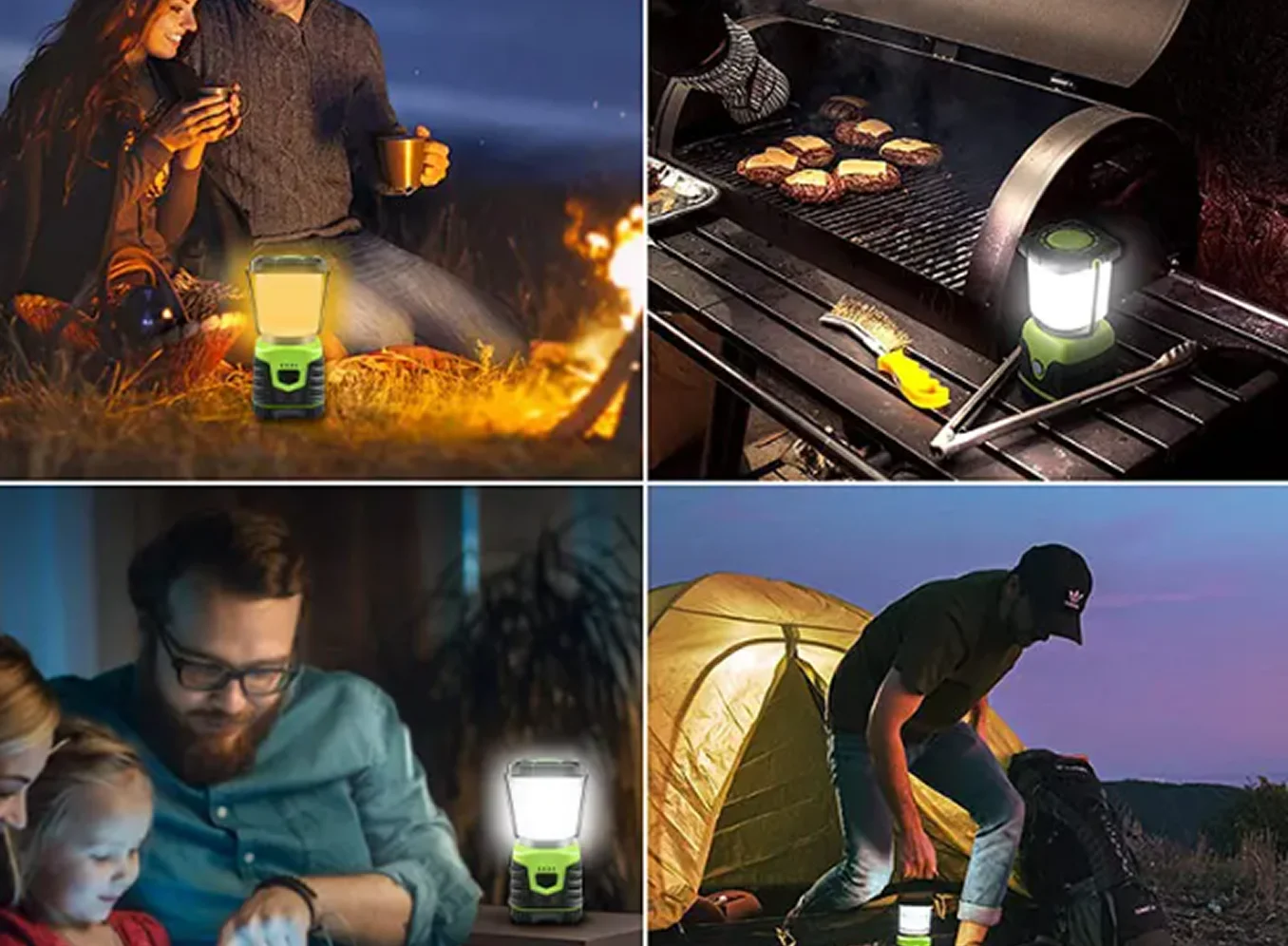
Outdoor camping lights are suitable for camping, patio parties, and all-weather outdoor activities. This may sound like a simple list of usage scenarios, but for those purchasing and selecting lights, the underlying question is the same: can this light work reliably when truly needed? At a campsite, light is more than just illumination; it determines the ease of cooking, the convenience of finding things, the safety of children, and the efficiency of packing up gear at night. For patio parties, the lighting needs to balance ambiance and practicality—it can't be too glaring, nor can it appear yellowish and dim halfway through.
From a product design perspective, these portable LED lights typically feature a semi-transparent diffuser on top, combined with the lower lamp body and a portable handle, creating a structure that can be placed directly on a table, on the ground, or inside a tent. Their value lies not in "looking like a lamp," but in their ability to evenly distribute light, making a small area usable at night. For engineers, purchasing managers, and product teams, the real assessment isn't whether it lights up, but whether the lighting method, structural stability, portability, and scene adaptability are sufficiently mature.
First look at the usage scenarios, then look at the product structure.
Many lighting purchasers make a common mistake: looking at the specifications sheet first, then considering the intended use case. In reality, the structure of a portable camping light often reveals more about its purpose than a single parameter. A lamp suitable for tabletop placement typically needs a stable base to prevent it from being blown over or knocked over; a lamp suitable for tents needs softer diffused light to reduce localized glare; and a lamp suitable for patio gatherings should provide wider illumination coverage so that several people sitting together can clearly see food, utensils, and items within reach.
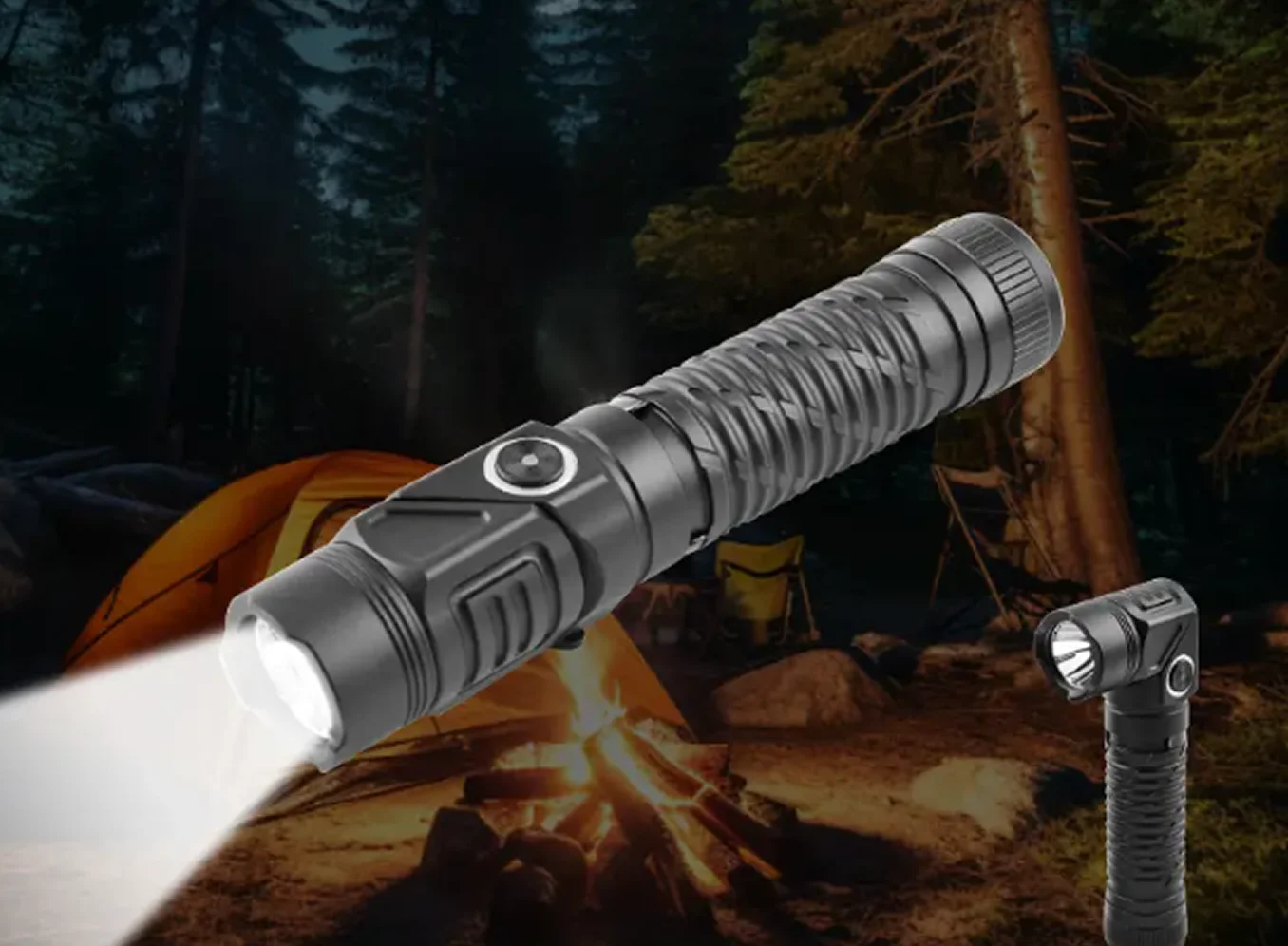
Based on the product information you provided, this type of light has a compact cylindrical or rounded rectangular shape with a frosted diffuser on top, emitting diffused lighting in approximately 360 degrees. This design is typical, suitable for "area lighting" within a campsite rather than "long-distance projection lighting." In other words, it's not a searchlight for illuminating a long distance, but rather for illuminating the area around you. This positioning is important because many buyers confuse camping lights with flashlights when selecting a model, resulting in an awkward user experience.
The core value of this type of portable LED camping light
Outdoor lighting can be broadly categorized into three types based on function: long-range lighting, task lighting, and ambient lighting. Portable camping lights typically fall into the intersection of the latter two categories. They need to be clearly visible without blocking the view like a powerful flashlight. This is where the frosted cover comes in. It transforms the point light source of the LED into a softer, more diffused light source, preventing glare at night and making it more comfortable for chatting, making coffee, or organizing gear around a table.
For backyard gatherings, this type of light has another practical benefit: it transforms a "temporary outdoor space" into a "sustainable space." Many activities at night, such as barbecuing, plating, cleaning, and childcare, rely on moderately bright, evenly distributed light. For camping, portability and stability are equally important. If the light is too tall, too thin, and has an unstable center of gravity, it will easily wobble on uneven surfaces; a well-designed base makes placing it on a picnic table or tent mat much easier.
From a manufacturing perspective, what are the key aspects of this type of product?
Based on the product information you provided, this is a product that combines consumer electronics with molded parts assembly. The outer shell is most likely made of plastic, and the frosted diffuser is also a common injection-molded or molded part. This approach is not new, but it has the advantage of balancing cost, weight, and mass production consistency. For portable outdoor products, lightweight and durability are often considered together; if the shell is too thin, it will be vulnerable to transportation and drops, while if the shell is too heavy, it will reduce portability.
It's worth noting that the "unseen parts" of a camping light often determine its long-term performance. Internal circuitry, power supply, switch feel, seam assembly, and battery compartment design all affect daily use. While current specifications don't mention battery type, battery life, charging method, or waterproof rating, these are precisely the items that must be confirmed during purchase. Especially in the context of "all-weather outdoor activities," buyers often assume it can handle complex weather conditions; however, without clear protective instructions, it's best not to treat it as a dedicated device for heavy rain or persistently damp environments.
When choosing a model, don't just focus on brightness.
When many teams look at lights, their first reaction is to ask, "How bright is it?" Brightness is certainly important, but it shouldn't be the only criterion. For outdoor camping lights like these, a more practical order of evaluation is usually: first, look at the illumination range; then, look at the stability; next, look at portability and power supply convenience; and finally, consider the upper limit of brightness.
For campsite use, even lighting is more crucial than localized brightness. A harsh white light in a tent may appear bright, but it can be uncomfortable. Tabletop lighting needs to cover food, utensils, and the work area; otherwise, if one half of the table is bright and the other half is dark, alternative light sources will be needed. For patio gatherings, color temperature and glare control also significantly impact the experience. The documentation only mentions "bright white light output," which is generally suitable for functional lighting, but for occasions where ambiance is more important, buyers should consider the specific environment before making a decision.
Another often overlooked point is placement. Lights that can stand upright are suitable for temporary lighting on desktops, floors, and in the trunk; if they also have handles or hooks, their application becomes even more flexible. However, the information you provided doesn't confirm whether they have magnetic, hanging, or dimming functions, so these features cannot be assumed to be present. It's best to clarify whether these features are included when purchasing, rather than relying on assumptions based on experience.
Common misconception: Treating camping lights as single-purpose products
Many buyers initially define camping lights simply as "lights to take when camping at night." However, in actual use, they discover their versatility: they are commonly used for power outage backup, trunk organization, temporary repairs, porch gatherings, and indoor emergency lighting. In other words, it's not just a product for the single purpose of "camping," but a portable lighting tool that covers multiple scenarios.
Because of its versatility, the product cannot be too one-dimensional in its details. Overemphasizing outdoor appeal might sacrifice comfort during indoor emergencies; overemphasizing desktop placement might neglect portability. The product form you've proposed—compact, self-standing, and radiating light—is inherently neutral, suitable for use from campsites to patios, and then from patios to power outage emergencies. This "cross-scenario" capability is also beneficial for retail and gift channels, as users are often willing to pay for a versatile product.
Key points that the purchasing and product teams should confirm
If you are evaluating this type of product, it's advisable to ask more specific questions. For example: What is the power supply method, and is it easy to recharge at night? Is the switch prone to accidental activation? Is the base stable on uneven surfaces? Does the lampshade easily accumulate dust, yellow, or scratch? Will the plastic parts become brittle in low-temperature environments? These are not "minor details," but rather practical factors that determine return rates and user feedback.
For brands and distributors, packaging is also crucial. Don't just write "suitable for camping," but rather describe the usage scenarios more comprehensively: nighttime campground lighting, patio barbecue lighting, desktop task lighting, backup lighting during power outages, and auxiliary lighting inside tents. This allows users to quickly determine if it meets their needs. After all, people who buy lighting products aren't always technically inclined; they're more concerned with whether they'll actually find it useful.
Who should buy this? In what situations can I place an order directly, and in what situations should I take another look?
If your needs include high mobility, easy placement, and moderate lighting range, this type of portable LED camping light is usually suitable. It is especially suitable for frequent campers, those who enjoy backyard barbecues, and those who need temporary emergency lighting. For home users, its value lies in its space-saving design during normal times, while being readily available during power outages or nighttime outdoor activities.
However, if your project requirements are very specific, such as needing continuous lighting for extended periods, a clear waterproof rating, a special installation method, or compatibility with a specific outdoor system, then you can't judge solely based on appearance. Portable lights may look similar, but their internal components can vary greatly. Confirming specifications, testing scenarios, and structural details is far more reliable than simply looking at pictures.
Practical advice for buyers
When making a purchase decision, evaluate it as a "multi-scenario nighttime tool" rather than just a camping accessory. First, confirm whether it's suitable for tabletop and ground placement, then check if the light is soft enough, and finally consider power supply and durability. For outdoor gear, the truly durable one is often not the most complex-looking one, but rather the one with a clear structure, simple operation, and reliable performance in common scenarios.
If you're screening products for e-commerce launches, bulk purchases, or product line expansion, it's recommended to test the product in real-world scenarios: a nighttime dining table, inside a tent, a courtyard corner, or as a backup during a power outage. Once you've tested it in several scenarios, its usability will quickly become apparent. Lighting products often don't have much room for fancy features; stability, comfort, and convenience are the ultimate differentiators.
What's the next step?
If you're looking for a portable lighting solution suitable for camping, patio parties, and all-day outdoor activities, the most effective next step isn't to keep looking at abstract descriptions, but to list your actual usage scenarios and then verify each item against the product's structure. Clarifying the power supply method, lighting coverage, base stability, and environmental adaptability will essentially eliminate most unsuitable options. For purchasing, the time saved at this step is often more valuable than dealing with returns and complaints later.